25 June, 2024
Project Update

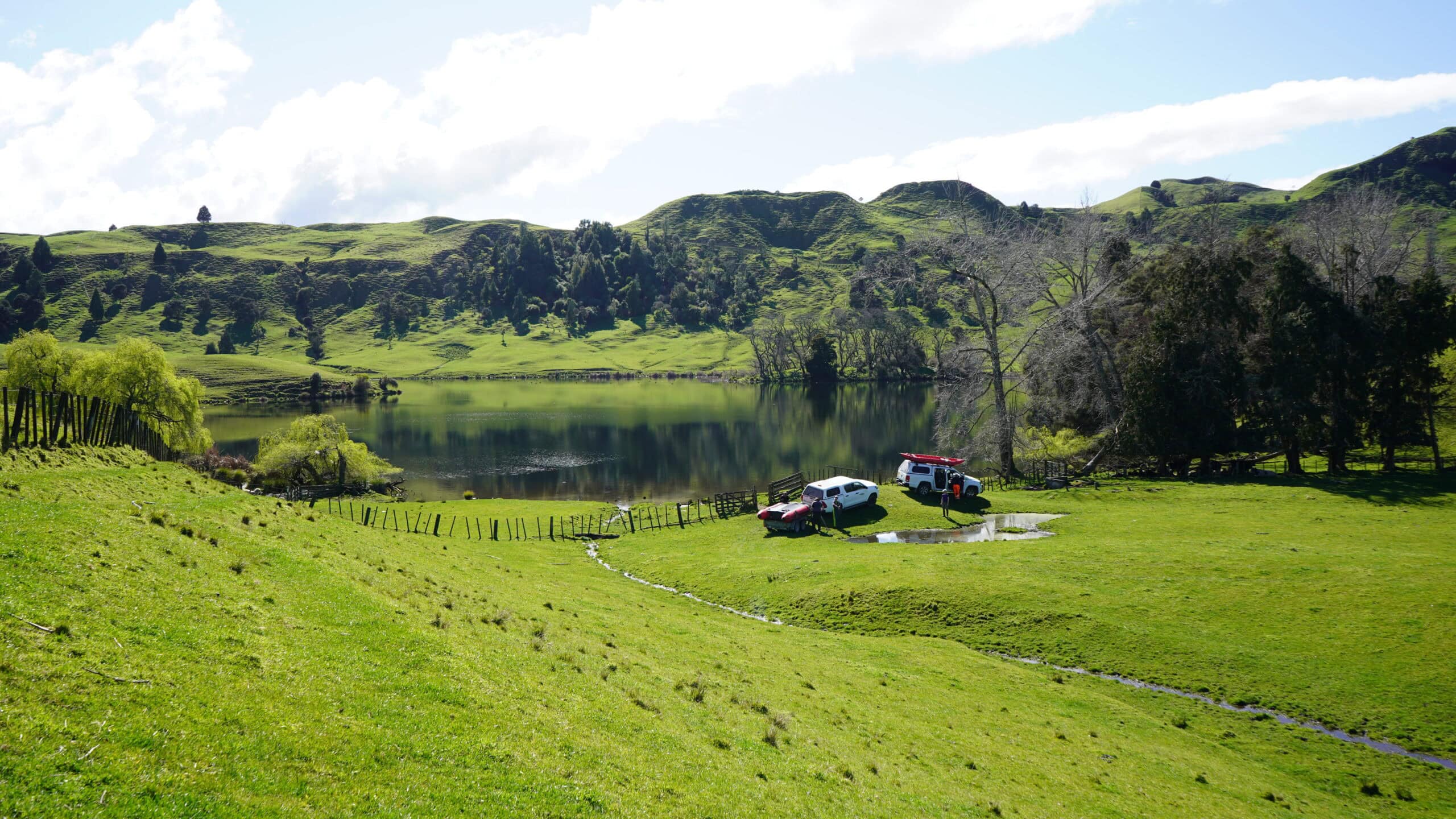
Li X, Thomson-Laing G, Vandergoes MJ, Howarth JD, Wood SA. 2026. Integrating pollen and sedimentary DNA refines reconstructions of vegetation change through human settlement: a case study from Lake Waihau, Aotearoa New Zealand. Palaeogeography, Palaeoclimatology, Palaeoecology, p.114118.
Human colonization has profoundly reshaped the landscapes of Aotearoa New Zealand. Reconstructing the transition from pre-human forests to Māori and later European land use remains challenging because some vegetation components, particularly insect-pollinated trees, shrubs, and aquatic plants, are poorly represented in traditional pollen records. Here, we integrate pollen and sedimentary DNA (sedDNA) analyses from a ∼1400-year sediment record from Lake Waihau, North Island, to reconstruct vegetation dynamics across three major cultural phases: pre-human, Māori, and European. The two proxies provide complementary yet distinct vegetation signals. Pollen primarily reflects regional vegetation, particularly wind-pollinated canopy taxa such as Podocarpaceae and Nothofagaceae, and provides a stronger representation of fern communities, whereas sedDNA captures local catchment vegetation and recovers a greater diversity of broadleaved trees, shrubs, wetlands, and aquatic taxa. Together, the records indicate that pre-human landscape comprised a diverse broadleaved–podocarp forest with relatively even representation of common taxa. During Māori settlement, sedDNA indicates that canopy taxa responded differently to forest clearance and, together with pollen, reveals a heterogeneous landscape of forest remnants, shrublands, fernlands, wetlands, and aquatic habitats rather than a simple fern-dominated landscape. European settlement was associated with the expansion of mānuka/kānuka shrubland, pasture, and exotic plantation species. These findings demonstrate that integrating pollen and sedDNA provides a more complete reconstruction of vegetation change than either proxy alone, highlighting the value of multiproxy approaches for reconstructing ecosystem transformation and establishing ecological baselines for restoration and Anthropocene palaeoecology.


